
This Biodeterrence "Framework" Is a Joke
The lack of academic rigor in this report is frankly astounding, but there it is

When I was in Livermore, California, two weeks ago, I had the honor of presenting a talk on how the threat of nation-states using biological weapons had changed over the past ten years or so. Much of my discussion ran along the lines of this article, suggesting that the U.S. national security community needs to rethink biological warfare given that China has moved past traditional “Cold War” biological weapons and is using biotechnology in a different fashion for military operations. There isn’t a lot of open-source material on state BW programs, so we’re all just trying to figure it out based on perceptions of national interests and technology advances. There was a separate panel for bioterrorism in which the concept of “technological determinism” was discussed, in that people tend to think bioterrorism must be a big threat because biotechnology is advancing on a more rapid pace than in the past. However, there isn’t evidence of that increased threat. We were kind of the warm-up act for a deeper discussion on technology, public health preparedness, and arms control.
Throughout this two-day panel, there was a lively discussion about “biodeterrence.” What it was, how we could get some. Some people believe that we need a special focus on biodeterrence to reduce the threat of actors using biological weapons against U.S. security interests. The opinion continues that, for biodeterrence to work, one must have a robust biosurveillance program to provide early warning of any biological incidents, as well as bioforensics and attribution to quickly distinguish a deliberate attack from a natural disease outbreak.
I am not one of those people. I did discover during that meeting that DTRA had provided funds to the NDU Center for Strategic Deterrence and WMD Studies1 to host two workshops in the winter/spring 2025 on this issue and developed this report titled “A Framework for Biological Weapons Deterrence.” The report just came out this month. It’s not good. It demonstrates an inadequate understanding of deterrence theory, as well as a skewed view of how nation-states and sub-state actors present biological threats against U.S. national security interests.
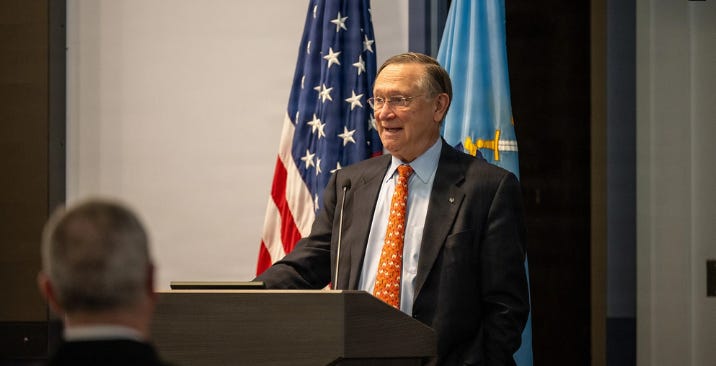
(Dr. Bob Kadlec provides comments on the DTRA-NDU “Framework for Biological Weapons Deterrence,” March 12, 2026. Photo by Sgt Christopher Nicely)
I don’t know exactly how to review this framework. It’s truly astounding in its flawed approach to the topic and backwards views. Let me offer a few opening comments. First of all, I reject the need for a stand-alone biodeterrence framework. Did strategic deterrence theory suddenly stop at nuclear weapons?2 Are general deterrence and tailored deterrence concepts not applicable to adversaries using biological weapons? Of course they are. This report (and similar discussions on this topic) talks to the need to deter biological weapons. It never says from whom and for what purpose are we deterring, which are pretty important factors.3 To be fair, this has been a general failure of U.S. policy discussions on WMD issues. For whatever reason, policymakers want to obsess over the weapon systems and their catastrophic effects rather than the users’ intent and the impact on U.S. military operations.
Details are necessary to form strategies and capabilities to deter adversaries, and this framework doesn’t offer any. Consider the broadness of the deterrence discussion when you add specific actors and intent. The U.S. government wants to deter (Russia, China, North Korea, Iran, ISIS, al Qaeda, Mexican cartels, militia groups, criminal organizations) from attacking (U.S. maneuver forces, air bases and sea ports, domestic crops and livestock, water and food supplies, politicians, law enforcement, allied nations, general public) by using a (traditional bioweapon, engineered biological organism, natural communicable disease, non-communicable disease, toxin, non-lethal bioweapon, anti-material biological weapon) because these actors want to (deter U.S. military attacks, degrade U.S. forces, make the U.S. general populace sick, assassinate a person, cause an agricultural sector to collapse, cause a lapse in trust of the government).
Who is it, specifically, that you intend to deter? What action exactly are you trying to deter them from doing? Is that particular stance credible? Pick and choose. It presents a significant number of scenarios by which a general statement of “we need to deter bioweapons” is insufficient. It reminds me of the debate over a surprise strategic nuclear attack - the “bolt out of the blue” - that underlies nuclear deterrence and missile defense debates. It lacks balance and any sense of risk assessment.
Because the USG might not be able to immediately attribute an attack to the threat source, the report suggests that we cannot rely on “deterrence by cost imposition” and instead require a broad “deterrence by denial” approach that shields us from all possible biological threats. This is an impossible task, given the multitude of distinct biological hazards and the general population that needs protecting. Even this report admits that deterrence by denial, on its own, would be “a risky strategy given the significant challenge of providing adequate and reliable population defense against the full range of virulent biothreats.” The budget implications of a deterrence by denial strategy are significant, especially when compared to using existing U.S. offensive capabilities that are available to deter through punishment.
Second, there is (in my opinion) an underlying agenda to push “deterrence by denial” as a preferred approach because it complements the public health sector. The public health community has long resented the billions of dollars going to national biopreparedness, even as the U.S. health care system has about three times the annual funding as the U.S. national security business has. They would like to see DoD invest in a global biosurveillance system and “threat-agnostic” medical countermeasures because it benefits their goal of mitigating natural disease outbreaks. They think it’s a two-for-one deal. There’s a longer discussion required to appreciate health securitization. Point being, if the DoD were to adopt such an approach, it would quickly degrade U.S. military readiness for biological warfare, because the funds would be prioritized to the many natural biological threats presented to the general public. This is not to say that natural biological diseases are not a threat - of course they are. But we have another executive agency (Health and Human Services) that has a very large budget to work that issue.
I don’t like the term “biosurveillance” in general because the term is misused, especially within DoD. The term suggests an effort to provide early warning and situational awareness of biological threats to humans, regardless of the source. I understand that’s how it is typically used. However, we can see this definition in the Biden administration’s 2022 National Biodefense Strategy (also used in Trump’s 2018 National Biodefense Strategy):
The process of gathering, integrating, interpreting, and communicating essential information and indications related to all-hazard threats or disease activity affecting human, animal, plant, and environmental health to achieve early detection and provide early warning, contribute to overall situational awareness of the health aspects of the incident, and enable better decision-making at all levels.
”All-hazard threats or disease activity” means chemical, biological, radiological threats - natural and man-made - that affect not just humans but also animals, plants, and the environment. It’s not just biological threats. This is a huge scope and not one the DoD can (or wants to) adequately address. It can and does, however, focus on health surveillance and disease surveillance as it affects service members.4 These are better terms that for some reason people resist adopting.
This also goes to bioforenics and bioattribution. The argument for more bioforensics and bioattribution capability is that the U.S. government might not realize that someone is attacking it with a biological weapon because it might take days or weeks before a virulent bug shows trending signs and symptoms in the general population. I hate to break it to these people, but we’re not in a “12 Monkeys” movie. Nation-states and sub-state actors generally want their targets to know it was them. Ambiguity eliminates the whole satisfaction of achieving one’s political goals over an adversary.

And in fact, the report notes (later) that attribution won’t help deterrence if the actors want us to know that they did it, but we can’t prove it because bioforensics is hard. I agree that these are important tools, and I believe that we already have them. It’s not 2001 where the FBI was flailing around, trying to figure out Amerithrax. Bioforensics may be harder to do with emerging biological threats and bioengineering, but the general authorities and process is in place. It’s not being ignored.
Let’s look at the report in more detail. I’m going to quibble right up front with the “4 C’s of deterrence” being capabilities, credibility, communication and comprehension. No one in the U.S. deterrence community has ever said “the 4 C’s” to include comprehension. Comprehension is part of successful communication between two political actors. The Framework references a 20-year-old Joint Operating Concept for Deterrence Operations, which I’m sure was initially drafted by an Air War College student for his thesis project. It’s not great, but it covers the basics and says “WMD” a lot - almost as much as it says “nuclear.” I don’t think anyone reads it today. Deterrence concepts have changed since then, but let’s just note that dated source.
Right at the beginning: “While naturally occurring pandemics represent the historical bioincidents of greatest magnitude, the U.S. Government is growing increasingly concerned about the potential for biothreats deliberately employed by bad actors with the intent to impose costs against the United States and/or U.S. allies and partners.” Really? Show me. Show me anyone outside of the DoD CB Defense Program who says this, ideally in a policymaking position. I don’t see the expressed concern anywhere.5 That includes the past administration.6
The background is pretty skimpy. Surprised that they left out the Trump and Biden National Biodefense Strategies in the history, although they come back on page 12 as critical of these strategies because they don’t “expressly discuss deterrence of BW threats.” That’s a cheap shot; those documents were intended to push a collaborative “whole of government” effort to respond to biological threats, not bad actors. Let’s skip right past the report’s section on the 2023 Biodefense Posture Review that endorsed a deterrence by denial approach. It was a shit document anyway.7
The Framework can’t even get the terms right for “deterrence by denial” - it talks to active denial, passive denial, and “denying the benefits of covert or deniable actions,” which I’m definitely convinced is not a thing. The JOC talks about active defense and passive defense, and I’m really puzzled as to why the authors of the Framework thought it was necessary to change these accepted terms. I would also add that the Proliferation Security Initiative and Cooperative Threat Reduction programs are definitely not “active denial.” They’re nonproliferation programs that the military supports. Proliferation prevention is necessary but not an offensive tool or a deterrent.
I do understand that people will make the argument that offensive operations, theater air/missile defense, and CBRN defense contribute to deterring a nation-state from using WMD. At the same time, I think it’s hard to determine if an adversary views these factors as substantial or just adjusts to attack other targets or uses more munitions. It all depends on the context. I would argue that the U.S. military created a counterproliferation strategy because it was afraid that tailored deterrence would fail. Active and passive defense capabilities are what the military falls back on when deterrence fails. They are necessary to protect U.S. forces from WMD attacks of which the U.S. military does not really invest adequately or practice.
The “passive denial” capabilities are both predictable and disappointing. They include public health measures - because that community wants a cut of this budget pie to bolster national response to natural disease outbreaks (which has nothing to do with deterrence)8 - as well as “military force protection measures,” which is not what the armed forces generally call CBRN defense capabilities. They also include “building allied and partner capacity” and “multilateral and international initiatives” which calls into question what this Framework is really supposed to be doing. Is this report meant for the U.S. government, or is it meant for DoD forces? We also see that building the U.S. industrial base in general biodefense capabilities is a thing. These last three items are not military passive defense. And I suggest that we do not have a national “passive denial” capability in which State and Commerce are partners. The authors of this report are throwing pasta on the walls to see what sticks.
The section on “deterrence by cost imposition” is just weak sauce - it’s definitely not something they really wanted to embellish upon. We understand that the USG has a long history of considering the use of nuclear weapons to retaliate against a biological attack. It’s also noteworthy that the report acknowledges that other nuclear-weapon states are not going to find U.S. nuclear retaliation to a biological attack as credible. But for some reason, the report notes that conventional response to a BW attack has no precedent - guess what, neither does a nuclear response - but that the U.S. military’s air strikes against “Syrian research and weapon storage facilities associated with the Assad’s chemical weapons arsenal” is an indication of this approach. I hate to break it to the authors, but the U.S. military absolutely did not bomb Syrian CW research and storage facilities due to the potential for collateral damage. The one attack during the Trump first term was against an airbase, targeting operational units. Attacking a bio weapons research or storage facility would be a whole other level of stupid. Also, those attacks were technically compellance measures, not deterrence.
The threat section of the report is entirely forgettable with its general statements on Russia and China, with one-liners about North Korea and Iran. Nothing new here. Absolutely nothing mentioned about sub-state actors, not even the two favorites, ISIS and al Qaeda. Instead, the authors go deep into explaining how great biological weapons are in terms of operational and strategic utility. No, really, they do that. This is pretty odd, other than to possibly explain the authors’ desire to urge immediate action to develop a biodeterrence strategy. There’s a hang-up here on old Cold War thought about biological weapons, and I recommend this article to throw some cold water on the idea that there’s a biological weapons arms race going on out there.
The cost-benefit discussion on the utility of biological weapons is just odd. The report lists seven benefits of adversarial use of biological weapons and three costs - the latter including that “adversaries may not want to be seen as an international pariah.” Really? that’s all you got on costs? That Russia and China, of all the nations in the world, are somehow worried about their international image? and at the same time, those two nations are unafraid of the potential backblast of infectious biological weapons affecting their own public?9 These guys?
(ChatGPT image)
In any event, my argument at the Livermore conference two weeks ago was that Russia and China may have offensive BW programs, but it’s hard to say what’s going on within them, other than I would suggest both have moved past traditional BW arsenals based primarily on anti-personnel agents. The report emphasizes the need to communicate biodeterrence to these “bad actors,” including the desire to counter misinformation by Russia or China on alleged U.S. BW actions. While acknowledging the need to counter mis- and disinformation campaigns, it’s not like this is brain surgery. I’m not going to belabor them other than to say, I’m not sure the U.S. government is any good at information campaigns. So why bother here.
Last, their second roundtable discussion offered up a number of “deterrence tools” that they binned into their four “C’s” of deterrence. None of these are particularly groundbreaking, I’m not going to list them here. Largely stuff like “know your enemy” and “invest in biosensors” and “signal to your adversaries.” BORING. And this leads to my last observation.
The larger biosecurity community, such that it is, likes to bemoan the alleged “silos” within which biodefense concepts are binned. The military biodefense runs parallel to the public health system which stands parallel to agricultural biosecurity which doesn’t cross over with laboratory biosurety and so on. I’ve made an argument that those silos are very necessary and not necessarily exclusive, you can read these articles on the USG biopreparedness as a whole or just biodefense within DoD. Usually this is the public health people again. They really beat the drum on the need to centralize everything that is bio-related and it’s just nonsense. But what I take from this “Biodeterrence Framework” is that their solution is to - wait for it - silo biodeterrence concepts away from strategic deterrence discussions. They want to silo a biodefense strategy away from the DoD Strategy to Counter WMD. They want to silo a biosurveillance system away from health surveillance. It’s ironic in a way.
There’s a short article on DVIDS along with the photo of Dr. Kadlec that I posted above. During this presentation, someone (I am not sure this was Kadlec’s office or the DTRA sponsor) posted “three pillars of the Framework” which is not referenced anywhere in this document. That said, it proposes actions along three lines of effort:
Prepare and Mitigate: Raising the “Biodeterrence IQ” of the Joint Force through expanded training, education, and the Biosurveillance Information Platform [none of which is mentioned in the report]
Threat Reduction: Leveraging the Cooperative Threat Reduction program to limit adversary expertise and secure vulnerable data against cyber exploitation [which the CTR program fundamentally does not do]
Attribute and Hold Accountable: Utilizing AI-enabled attribution and interagency partnerships to eliminate the shield of anonymity for state and non-state actors [AI is not discussed in the report, and as I’ve noted, this isn’t a good rationale for attribution]
I don’t know where they’re going with this at all. This is what happens when you have a DoD WMD community that cannot think beyond its technical focus. We lack WMD analysts in the U.S. government who understand how natsec policy works, and we don’t have U.S. natsec leaders who understand how countering WMD works (or who want to build these capabilities). This is a serious problem that requires expanded education and leader training, but that’s just not happening. In part this is because people in authority keep shrinking or eliminating the centers of excellence that do want to provide clarity on this niche issue.
Not that I have any experience with that. The NDU CSWMD is a shadow of itself as well. It used to be a robust academic center with deep expertise, offering an invaluable annual conference on countering WMD. Now the NDU leadership has buried the center within another center, its best experts have retired or moved on, and its funding has increasingly dried up. I hear that the Center for Nonproliferation Studies is next to drop. The AF INSS is on its way out. It’s not a good time to be in this business, while there are still WMD issues to discuss and develop.
Formerly the NDU Center for the Study of WMD. I mentioned in a former post that Congress had proposed language into the 2026 NDAA to codify the NDU CSWMD’s mission. I thought the language had been pulled. I was mistaken.
Well, in no small way, sure, people who talk about strategic deterrence only mean nuclear deterrence but hang in there with me.
Yes, there is a list of four nations who are “bad actors,” but the point of deterrence is saying that you want to stop them from doing what exactly? That’s never offered in this paper.
Let me be clear that the military medics perfectly understand this issue, and it’s usually the OSD civilian leaders who seem to want to push “biosurveillance” as something the underfunded DoD Chemical-Biological Defense Program or DTRA should build. They just prefer not to argue about it. It’s not sustainable. That doesn’t stop OSD from ordering the JPEO for CBRND to build one. There’s little to no demand from the military services or combatant commands for this capability, but COVID happened, so…
In the 2022 National Biodefense Strategy, terms such as “serious,” “significant,” and “evolving” are used to describe biothreats. Terms of which I can get behind.
Yes, Biden had an “Office of Pandemic Preparedness and Response Policy.” That didn’t cover deterring nation-states developing biological weapons.
At my biosecurity conference in Livermore, a number of people were extolling the virtues of the DoD Biodefense Council that was created as a result of the DoD Biodefense Posture Review. A worthless and lackluster OSD acquisition-chaired function that attempts to force the military services to adopt strategies and capabilities that they do not want.
There’s an argument out there that if the U.S. public health system were robust, that this would deter China or Russia from attacking the U.S. homeland with a contagious biological disease. The recent measles outbreak in the United States certainly emphasizes the weakness of the U.S. public health system, but the blame for this is solely on the state and local governments that do not adequately fund and execute sound disease prevention plans.
I think there are shades of “China caused COVID through a lab leak and didn’t care about the impact on its population” in this discussion and it’s pretty ridiculous.