
Looking for Unconventional Weapons Issues in the 2026 NDAA

I thought I’d take a look at the massive $1 trillion National Defense Authorization Act for 2026 in today’s post. We still have to wait for the appropriations bill to know the exact funding details, but certainly the NDAA has some targets and choice nuggets to talk about. I’ll try to break this up by general topic areas, which will mean mostly nuclear stuff, I am guessing. Let’s find out.
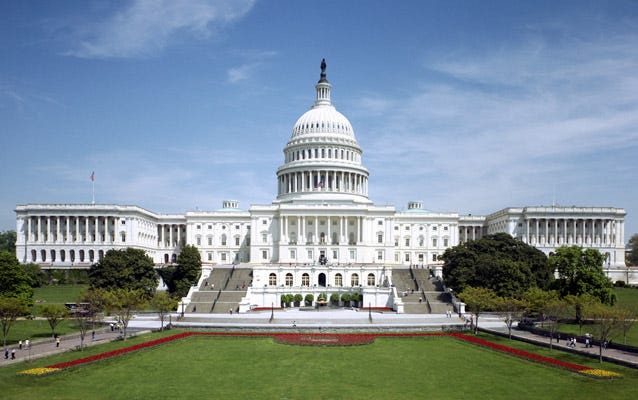
I searched for anything on “weapons of mass destruction” and didn’t find anything (other than references to authorized funding to specific DTRA program lines), but strangely enough, the House Rules committee had a suggested amendment to the 2026 NDAA that would create a “Center for Strategic Deterrence and Weapons of Mass Destruction Studies.” Here’s the text.
Section 554, Center for Strategic Deterrence and Weapons of Mass Destruction Studies.
(a) ESTABLISHMENT.—Section 2165(b) of title 10, United States Code, is amended, in paragraph (4), by inserting ‘‘(including a Center for Strategic Deterrence and Weapons of Mass Destruction Studies)’’ after ‘‘The Institute for National Strategic Studies’’.
(b) MISSION.—The mission of the Center for Strategic Deterrence and Weapons of Mass Destruction Studies established under such paragraph shall be to—(1) prepare national security leaders to address the challenges of strategic deterrence and weapons of mass destruction through education, research, and outreach activities throughout the Federal Government; (2) develop leaders with an understanding of strategic deterrence and the implications of weapons of mass destruction; (3) in accordance with guidance provided by the Chairman of the Joint Chiefs of Staff, develop and provide appropriate curricula, learning outcomes, and educational tools relating to strategic deterrence and weapons of mass destruction for use at institutions that provide joint professional military education; (4) serve as the primary institution within the Department of Defense for the study of strategic deterrence and weapons of mass destruction education in joint professional military education; (5) design, develop, and implement studies and analyses to enhance understanding of— (A) strategic deterrence; (B) the threat of weapons of mass destruction to the security of the United States and globally; and (C) responses to prevent, mitigate, or eliminate the threat in accordance with Department and national security policies and strategies; and (6) provide expert support on strategic deterrence and weapons of mass destruction issues to the Secretary of Defense and other Federal Government leaders.
See, this is funny, in sick way, because that was exactly my job at the Air University between 2013 and the summer of 2024, right up to when the Air Force leadership decided they didn’t need this education and cut my staff, funding, and office space (I’m not bitter). There is a Center for the Study of WMD at the National Defense University, and it currently falls under INSS, so I’m thinking this would have been more of a name change than anything else. The NDU CSWMD has, for some years now, tried to shift its focus to nuclear deterrence topics, but didn’t get any support to work this area from NDU, the military services, or OSD. Interesting that the Senate didn’t seem to think it was worth adding to the Act. Who cares about WMD anyway.
The NDAA goes through so many changes as it marches through committees toward becoming a real bill. I don’t pretend to understand how Congress works or why it passes the legislation that it does, only that there’s a product called a Public Law that comes out at the end. It is interesting though to see what falls out of the draft bills during this long process.
Section 1691 addresses DoD’s Cooperative Threat Reduction funds. Russia isn’t a partner to the CTR program but there’s still work to be done on nonproliferation projects in other countries around the world (including Ukraine). There’s $6.3 million for delivery system threat reduction, $25.3 million for chemical security and elimination, $38.1 million for global nuclear security, $137.7 million for biological threat reduction, $47.1 million for proliferation prevention programs, and $28.3 million for “other administrative costs.” Pretty sure this is all DTRA money (much less than a decade ago). The section makes a point to say that DTRA should continue to provide assistance to “maintain existing pathogenic inventory and disease surveillance systems at existing locations.” I believe that the cooperative biological engagement program is a mistake, but the inertia of federal spending keeps it alive.
In section 6404, Congress has decided to support Director of National Intelligence Tulsi Gabbard’s decision to eliminate the National Counterproliferation and Biosecurity Center. The section directs the DNI to “appoint an appropriate official within the [ODNI] to oversee the efforts and activities” relevant to 50 USC 3057, which contains the previous responsibilities of this center. The ODNI is still responsible to address the proliferation of weapons of mass destruction and foreign biological threats, but just without a full staff to accomplish this mission. Congress expects this to be done within 180 days of this Act. What a remarkably short-sighted, stupid act. I previously had my two cents on this topic here.
NUCLEAR WEAPONS
Title XVI, Subtitle C, “Nuclear Forces” has a lot of detail, because this is something Congress cares deeply about. Not enough to push for a New START agreement, but still, nuclear weapons are big ticket items. Section 1631 is about the Nuclear Weapons Council, which is a joint DoD-DOE group that addresses nuclear weapons requirements (the secretariat of this group is the ASD(ND-CBD). I don’t understand what the problem is here. Congress wants it to be clear that the NWC is the “primary mechanism for integrating, streamlining, and ensuring unity of purpose and direction for nuclear deterrence related activities” within DoD and DOE. Similar to the whole backstory as to the ASD role, there’s some feeling that the NWC was being held back or stifled from presenting a consolidated view on nuclear issues to the SecDef. The only significant difference that I see is directing the NWC to address nuclear deterrence policy and resources, not just the development of nuclear weapon requirements. I don’t like policy being addressed by acquisition officials.
Section 1632 directs the Air Force to ensure that “not fewer than 400 [ICBMs] are operationally available” and there will be “not fewer than 150 launch facilities” at F.E. Warren AFB, Malmstrom AFB, and Minot AFB. This means that 50 tubes will be empty but in a “warm” status, just in case the U.S. government wants to increase its nuclear stockpile after New START expires in February. There’s a congressional caucus to protect these bases from any further reductions after New START took effect, because those constituents want to keep military bases open and money flowing national security and the Triad demand such a plan.
Section 1633 is about the nuclear sea-launched cruise missile (SLCM) that the Navy absolutely does not want but that President Trump wants to load into a future battleship that will never be built. It could go into attack submarines, however (again, against the Navy’s desires). Congress decided to set the date of fielding to 2034. A shorter fielding date might be possible because the proposed delivery system will be using an existing nuclear warhead (with modifications), and this is pretty much just an engineering job putting the warhead into the Navy’s Tomahawk missile design. The nuclear hawks want this weapon system, but it’s just a bad idea all around.
Section 1634 directs the Air Force to ensure that the B-21 bomber can employ both nuclear gravity bombs and the Long-Range Standoff Weapon (air-launched cruise missile). I honestly thought that the LRSO was only meant for the B-52 bombers, but evidently, it’s for both bombers. Interestingly, the language directs that the B-21 be operationally certified to employ nuclear gravity bombs by 180 days after the aircraft achieves initial operational capability, but two years later to achieve IOC for the cruise missile.
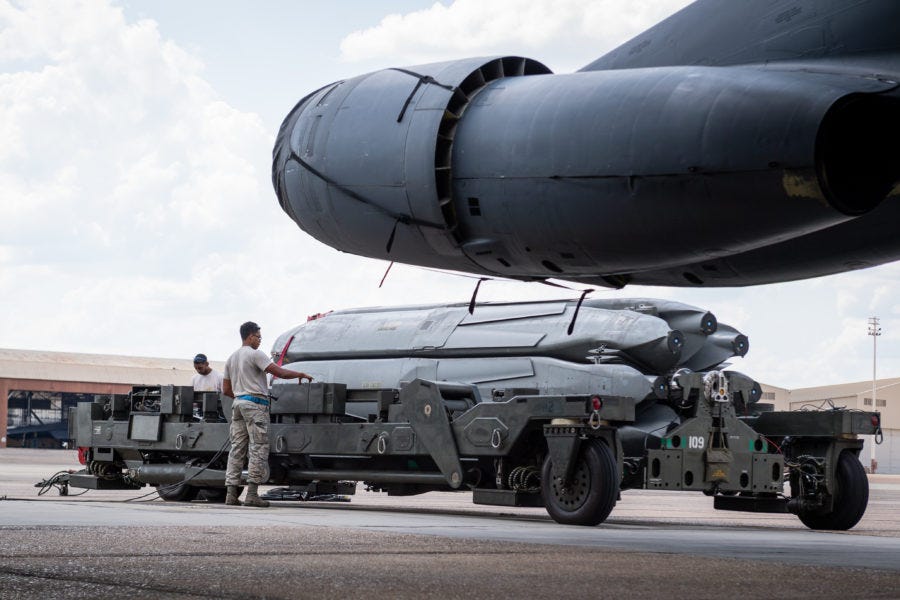
(This is a carousel of the ACLM, not the new LRSO. Photo by SrA Lillian Miller, 2020)
Section 1635 is about standing up the Assistant Secretary of Defense for Nuclear Deterrence and Chemical and Biological Defense Policy and Programs (ASD[ND-CBD]) position and giving that office responsibly support the USD Acquisition and Sustainment in its roles as the Defense Acquisition Executive and Milestone Decision Authority for nuclear weapons platforms and delivery systems and nuclear command and control systems. DoD has 45 days to accomplish this. The penalty for not making the deadline is withholding 50 percent of the operation and maintenance funds for the Under Secretary of Defense for Policy and the Under Secretary of Defense for Acquisition and Sustainment. Notably, I don’t believe the full Senate has yet confirmed Dr. Bom Kadlec for the position. I sense Sen. Deb Fisher’s (R-NE) hand in this short paragraph.1
Jumping down to section 1641, the Air Force has to submit a strategy that details how it plans to meet the challenges of an aging LGM-30G Minuteman III system prior to the introduction of the Sentinel missile. There’s a lot of details in here. Congress wants to see all supportability challenges, system performance issues, test activities, a discussion on extending the missile’s end-of-life performance, and all funding issues associated with this system and its supporting infrastructure. I think the goal is to keep Congress informed on the possible degradation of the Minuteman III system, given that the Sentinel program has slipped a considerable number of years on the schedule. Oversight in action causing inaction.
The ASD(ND-CBD) has a new responsibility under section 319. He’s going to be the chair of a DoD Working Group on Advanced Nuclear Transitions, which intends to develop and execute strategies to accelerate the procurement and fielding of commercial advanced nuclear reactors for military installations. I’ll note that the ASD position is supposed to address nuclear weapons requirements and not nuclear reactors, which work under an entirely different set of rules and regulations, but why should Congress worry about that. It’s all nuclear physics stuff. I’ll also note, again, that Dr. Bob Kadlec is no nuclear expert, but I guess he can run high-level meetings.
The National Nuclear Security Administration has a big section in the NDAA (Title XXXI, DOE National Security Programs) getting authorization to spend its funding on nuclear weapons development and sustainment. I’m not going to get into these sections because it just continues previous legislation, and it’s a lot of uninteresting technical details. Interesting only if you’ve never read about the NNSA’s work and you want to learn more. Let’s move on.
BIOLOGICAL DEFENSE
Under Section 241, Congress is calling for the DoD to designate a “senior official for biotechology issues” and a “Biotechnology Management Office.” Technically, this isn’t strictly a biodefense issue, but certainly one could address biotech issues related to biodefense. If I had to guess, this should fall under the Under Secretary for Research and Engineering, which already has a senior official for biotechnology. Congress also wants to see a DoD Biotechology Strategy by June 2026 (section 246). Lots of biotech directives in here. Another new responsibility for the incoming ASD(ND-CBD) is to develop international biodefense capabilities, whatever that means today.
SEC. 1207. ENHANCEMENT OF INTERNATIONAL BIODEFENSE CAPACITY.
(a) CLARIFICATION OF ROLES AND RESPONSIBILITIES.—The Secretary of Defense shall direct the Assistant Secretary of Defense for Nuclear Deterrence, Chemical and Biological Defense Programs, in consultation with the Director of the Defense Threat Reduction Agency, to enter into memoranda of understanding with other departments and agencies of the Federal Government to clarify the roles and responsibilities of those departments and agencies for building biodefense capabilities internationally in execution of national security and other policies of the Federal Government, with the Secretary focused on working with defense counterparts in countries that are allies of the United States.
(b) ELEMENTS OF MEMORANDA OF UNDERSTANDING.—The memoranda of understanding entered into under subsection (a) shall address how each relevant department or agency selects partner countries and the feasibility of coordinating efforts with each such country.
Since the “DoD Biodefense Posture Review” report completely screwed up the definition of biodefense capabilities, this could literally mean anything. DTRA can get an MOU with other government agencies or countries, but is it getting more funds? Or is this a blanket opportunity to just use the Cooperative Biological Engagement Program funds to do whatever they call “biodefense?” I don’t know. I’m pessimistic that this is anything related to national security, but rather a global health issue. If it’s truly about military biodefense against deliberate biological incidents, I’m all for it. If' it’s public health related, then it ought to be done by HHS and not DoD.
Interestingly, under section 719, the DoD CB Defense Program is to participate in a “Strategic Infectious Disease Medical Research Plan” to ensure that all infectious disease medical research conducted by the DoD is linked to military readiness and joint force requirements. Of course, the Defense Health Agency is in here as well. This plan is supposed to ensure that there’s no duplication of effort, but they can just make up some rationale as to how the CBDP needs to address natural disease outbreaks because it’s all for the good of the military service members. It’s wrong.2
Under section 851, Congress is enabling the “BIOSECURE Act” to prevent U.S. government agencies from procuring biotechnology equipment or funding biotechnology services from “companies of concern,” probably aimed at those in China. There are exceptions for public health issues, in particular for service members serving overseas. While this is a “national security” issue and some people are excited by this new legislation, it’s not really biological defense, but I thought I’d note it here.
Section 1068 directs the Government Accountability Office to examine Army research on offensive biological weapons, specifically, its development of tick-borne rickettsia between 1945 and 1972. It’s also to include a review of any relevant scientific research on the history of Lyme disease in the United States. The only thing I can imagine is that some congressperson has been told by a nutcase concerned citizen that Lyme disease was a U.S. manufactured disease let loose upon the country and they want the government to fess up. Crazy times.
CHEMICAL WEAPONS
There’s nothing specific to chemical defense requirements in here. Not really a surprise, no one cares about the U.S. military’s chemical defense programs. While there are funding recommendations for specific program lines within the DoD CB Defense Program, I’m going to wait until the OSD Comptroller releases the DoD Budget next year before doing any analysis. In Subtitle E, here is an extension on a required report on the Russian Federation to include its use of chemical weapons as part of armed conflict, which is contrary to the conditions of the Chemical Weapons Convention. It also covers Russian use of chemical weapons against individuals outside of an armed conflict (e.g., in state-sanctioned assassinations) as well. I will remain confused as to how Russia openly has a chemical weapons program and no one in the military seems to be remarking about this.
Congress also wants to an analysis of Syria’s progress in “identifying and destroying any remnants of the Assad regime’s chemical weapons program, including any stockpiles, production facilities, or related sites” (section 5506). Notably, Greg Koblentz recently penned an article “Curing a chemical hangover” in which he calls for the need to verify Syrian claims of its chemical weapons destruction campaign.
So far, the OPCW has only been able to visit 15 of the more than 100 undeclared sites suspected of having links to Syria’s former chemical weapons program. These visits, however, have already yielded thousands of new documents and detected traces of a nerve agent at one undeclared site. Progress has been slow due to the hazardous conditions at these sites, including the presence of unexploded ordnance, and the unstable security situation in Syria where the central government faces challenges from Assad loyalists, Alawite extremists, former rebels, the Islamic State, and minority groups.
This instability is especially pronounced in the coastal provinces, home to the Alawite community from which the Assad regime drew much of its manpower and which remains a hotbed of insurgency. Unfortunately, this region is the most likely to house what remains of Assad’s chemical arsenal since it was long considered the most secure part of the country. In addition to a loyal population, this area was protected from outside intervention by a major Russian military presence.
Maybe someone in Congress read his article. Anyway, that’s all I’ve seen here. Nothing too surprising. For the most part, Congress remains a proponent of status quo and incremental change as needed. It’s good to see Congress exercising its oversight role over defense issues, such as it is. One does not get to see too much of that in the committee hearings shown on CSPAN or discussed in the national media.
As a short explanation, she was largely responsible for changing the ASD(NCB) position to include the development of nuclear deterrence policy and to have a stronger hand in nuclear modernization issues.
Long time belief that the CBDP was tasked to address biological warfare threats and not natural disease outbreaks. For some reason, that’s a controversial take today.
The bit about standing up the ASD(ND-CBD) position with only 45 days to comply is wild timing. Withholding operational funds from USD Policy and USD A&S seems harsh but that's congressional oversight for you. I worked on a few defense acquisition projects and the whole setup of having acquisition officials drive policy direction always felt backwards to me, like mixing responsibilities that shouldn'tt overlap. The part about ensuring 400 operational ICBMs with 150 launch facilities shows how strategic basing really drives modernzation decisions more than pure capability needs.
It seems like 400 ICBMs is a bit much. The triad is a good idea, but could we make do with 200 to 300?
And yes, a nuclear SLCM is moronic given that the conventional US Navy is stretched so thin.